

Understanding Coffee Bean Varieties and Flavors
Arabica, robusta, and the handful of varieties behind them explain more about your cup than the roast level on the bag ever will.
People ask us at the counter, almost every day, why one bag tastes like blackberry jam and the next tastes like toasted almonds when both of them say “medium roast.” The honest answer is that roast level is the last thing that happens to a coffee, not the first. Long before it reaches our drum roaster, the cup has been shaped by a plant variety, an altitude, a soil, and a decision someone made about how to dry the fruit. Learn to read those four things and the bag label stops being marketing and starts being useful.
Two species, and why it matters
Nearly all the coffee sold in the world comes from two species. Coffea arabica grows at higher elevations, ripens slowly, and carries more sugar and more acidity. Coffea canephora — almost always sold as robusta — grows lower and hotter, resists disease better, and delivers roughly twice the caffeine along with a heavier, woodier body.
Neither one is automatically better. A well-grown robusta adds real weight and crema to an espresso blend, which is why many Italian houses still use it deliberately. A badly processed arabica is just sour. What is true is that the flavors people describe as “fruity,” “floral,” or “tea-like” almost always come from high-grown arabica, and that is where most specialty coffee lives.
The varieties underneath
Within arabica, the variety is the closest thing coffee has to a grape name, and a few show up constantly on our bar:
- Typica and Bourbon — the two ancestral varieties most others descend from. Balanced, sweet, classically “coffee-like.”
- Gesha — originally from Ethiopia, famous in Panama. Jasmine, bergamot, and a startling price tag.
- SL28 and SL34 — Kenyan selections responsible for the blackcurrant acidity Kenya is known for.
- Caturra and Catuai — compact, high-yielding Bourbon mutations that carry most of Central America.
- Ethiopian heirloom — a catch-all for thousands of indigenous types no one has fully cataloged.
Processing does half the work
How the cherry is dried changes the cup as much as where it grew. There are three methods worth knowing, and you can usually taste which one was used.
- Washed. The fruit is stripped off before drying. The result is clean, transparent, and acid-forward — this is where you find the crisp citrus and blackcurrant notes.
- Natural. The whole cherry dries intact, and the fruit sugars ferment into the seed. Expect berry, wine, and a heavier sweetness.
- Honey or pulped natural. A middle path, with some fruit left on. Rounder body than washed, cleaner than natural.
If a coffee tastes like fruit, thank the farm. If it tastes like chocolate or toast, thank the roaster. Both are real flavors; they just come from different parts of the chain.
Reading a bag like a barista
Altitude appears on good bags for a reason. Coffee grown above roughly 1,500 meters matures more slowly, which concentrates sugars and sharpens acidity. Below about 1,000 meters, you tend to get softer, nuttier cups. Neither is a defect — a low-grown Brazilian natural makes an outstanding milk-drink base, and we use one on our espresso bar for exactly that reason.
Harvest date matters more than roast date, in our opinion. Green coffee is seasonal. A Kenyan picked fourteen months ago has lost most of what made it worth buying, however recently it was roasted. Look for a crop year on the bag, and if there isn’t one, ask.
Try this at home
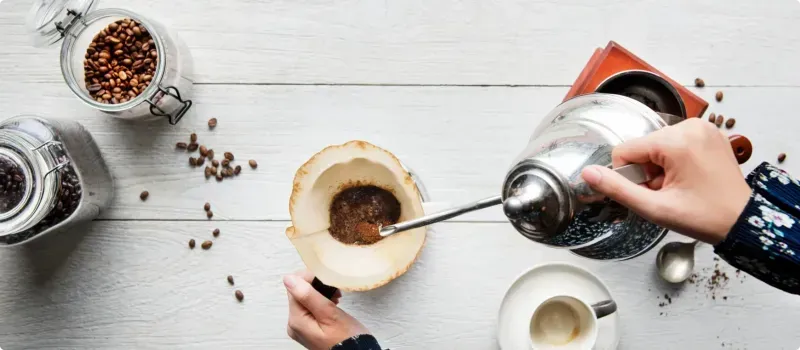
Buy two coffees the same week: a washed Colombian and a natural Ethiopian. Brew them side by side with the same grinder, the same water, the same ratio. Do not take notes on the first sip — take them as the cups cool toward room temperature, where the differences separate dramatically. Most people who do this once can tell a washed coffee from a natural one for the rest of their lives.
If you want to skip the homework, come stand at the bar. We cup every new lot before it goes on the menu, and there is usually a spare spoon. You can also browse our current coffee menu to see which origins are pouring this week.