



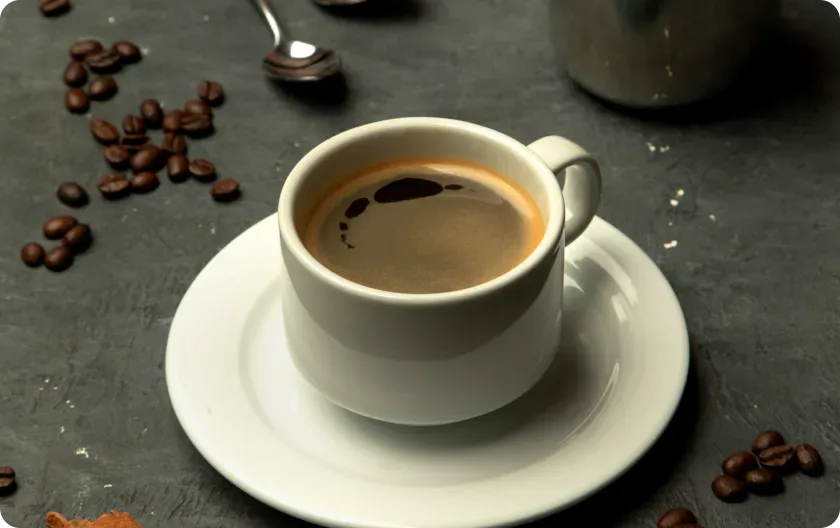
A Day in the Life of a Cafeteria Barista
Open to close on a Wednesday, from the 5:40 a.m. dial-in to the last rinse of the steam wand, and what the job actually asks of you.
People picture this job as pouring hearts into flat whites for eight hours. There is some of that. Mostly it is a long sequence of small, boring decisions made correctly under time pressure, and the reward for making them correctly is that nobody notices. Here is an ordinary Wednesday.
5:40 a.m. — Dialing in
I get in twenty minutes before the machine does anything useful, because the group heads need to come up to temperature and so do I. First shot of the day is always bad. It is supposed to be. The grinder has been sitting overnight, the burrs are cold, and the first dose out of the hopper is stale.
The dial-in is the most important ten minutes of the shift:
- Pull a shot, weigh the dose in and the liquid out, time it.
- Taste it. Sour means too fast — grind finer. Bitter and thin means too slow or too hot.
- Adjust one variable, wait for the grinder to clear, pull again.
- Repeat until three shots in a row land in the same window.
- Write the setting on the whiteboard so whoever follows me knows where we started.
That last step is the one new baristas skip, and it is the one that saves the afternoon.
6:30 a.m. — The bakery handoff
Esther has been here since four. The case gets filled in a fixed order — laminated on top, loaf cakes at eye level, cookies at the bottom where kids can see them — and whatever is left from yesterday is bagged for the staff or goes to the shelter two blocks over. We do not sell day-old pastry.
7:00 a.m. — Open
The morning rush is not really a rush. It is a queue with a rhythm, and the whole craft of the job is protecting that rhythm. Regulars come in waves: the pre-commute crowd until about 8:15, then a gap, then the people who work from laptops and stay three hours on one cortado.
The fastest bar in the city is not the one with the quickest hands. It is the one where nobody has to ask a second question.
That is why we take the order, the name, and the milk in one breath, and why the drink caller stands where both the register and the bar can hear him. Darrell drills this in training for a reason.
11:30 a.m. — The quiet hour
This is when the real work happens, and it is all maintenance:
- Backflush the group heads with detergent, then three plain rinses.
- Break down and brush out the grinder chute — old grounds go rancid faster than anyone expects.
- Descale the steam wand tips in a cup of hot water, and check the milk fridge temperature.
- Re-dial the espresso, because the ambient temperature has climbed five degrees since 6:40 and the shots have drifted.
- Restock everything to the line marked on the shelf, so the closer is not hunting for lids at 5:50.
Skipping any one of these makes tomorrow worse. Skipping the grinder brush-out for a week makes tomorrow much worse.
2:00 p.m. — Afternoon
Afternoons are slower and more conversational. This is when someone finally has time to ask what a cortado is, or why the Ethiopian tastes like blueberries, and when I get to do the part of the job I actually love. It is also when I test syrups for the seasonal board, usually on whoever is unlucky enough to be sitting at the window. If one survives the window test, it ends up on the menu within a month.
5:50 p.m. — Close
Close is a checklist and nothing more. Milk dated and dumped or saved, hoppers emptied, portafilters soaked, the espresso machine flushed one last time, floors done, the whiteboard wiped except for tomorrow’s grind setting.
Then the lights go off, and the last thing I do is pull one shot for myself and drink it standing up. Ten hours on my feet and I still want the coffee. That is roughly how you know you are in the right job.